Beyond Cortisone: A Root-Cause Approach to Chronic Foot Pain
You’ve probably already heard the standard story.
You limp into an appointment, describe the pain, get a cortisone injection and a referral for physical therapy, then head home with a generic sheet of stretches. Maybe you’re told to ice it. Maybe you’re given a walking boot. Maybe you leave with orthotics and instructions to “take it easy for a few weeks.”
At first, it helps. The pain fades enough that you think the problem is finally resolving. You walk better. You move more comfortably. Life feels normal again. Then, slowly, the pain returns. Maybe it’s after a vacation where you walked more than usual. Maybe after a workout. Maybe after doing absolutely nothing different at all. But eventually, you find yourself right back where you started — frustrated, discouraged, and wondering why nothing seems to last. That cycle is incredibly common in chronic foot pain. And in most cases, it happens for one simple reason: The symptom was treated. The root cause wasn’t.
At Pacific Point Podiatry, we believe chronic foot pain requires a fundamentally different approach. Pain suppression alone is not enough. Real healing requires understanding why the tissue failed to recover in the first place — and building a treatment plan that addresses every layer contributing to the problem.
Because the goal should never be temporary relief.
The goal should be lasting healing.
The Hidden Problem with Traditional Foot Pain Treatment
Most patients assume that if a treatment reduces pain, it must also be fixing the injury.
Unfortunately, those are not always the same thing.
Pain is a signal. It tells us something is wrong. But turning down that signal does not automatically repair damaged tissue, restore biomechanics, or improve the body’s healing capacity.
That distinction matters tremendously in chronic conditions like:
Plantar fasciitis
Achilles tendinopathy
Posterior tibial tendon dysfunction
Morton’s neuroma
Chronic ankle instability
Peroneal tendon injuries
Stress-related overuse injuries
These problems are often far more complex than simple inflammation.
In many chronic cases, the tissue itself has begun degenerating. Collagen fibers weaken. Blood flow decreases. Mechanical overload continues daily. The body’s repair process becomes stalled. What started as an acute injury evolves into a chronic dysfunction.
Yet many traditional treatment models still rely primarily on symptom suppression.
Rest.
Anti-inflammatory medications.
Steroid injections.
Temporary activity modification.
Repeat when symptoms return.
Again, these treatments are not inherently wrong. In fact, some patients absolutely benefit from them in the short term. The problem occurs when they become the only strategy being offered.
A patient can feel temporarily better while the underlying tissue continues deteriorating beneath the surface.
That’s why so many people end up trapped in a cycle of recurring pain.
Why Chronic Foot Pain Often Fails to Heal on Its Own
One of the biggest misconceptions about chronic injuries is assuming the body is still actively trying to heal them.
In reality, many chronic injuries enter what’s essentially a stalled healing state.
The tissue is no longer acutely inflamed, but it hasn’t successfully repaired either.
Think of it like a construction project that started but never finished. The scaffolding is still there. The structure remains unstable. But the workers stopped showing up months ago.
This is especially common in foot and ankle conditions because many of these tissues naturally have poor blood supply.
The plantar fascia, Achilles tendon, and posterior tibial tendon all heal slowly compared to other structures in the body. Once degeneration develops, simply “resting” often isn’t enough to restart the healing cascade.
At the same time, the mechanical stress that caused the injury may still be happening every single day.
Every step.
Every workout.
Every hour standing at work.
Every compensatory movement pattern.
If the tissue is continually overloaded while also lacking an effective repair response, symptoms persist indefinitely.
That’s why chronic foot pain rarely has a single cause.
It’s usually the result of multiple overlapping problems occurring simultaneously.
The Insurance-Based Model Was Never Designed for Root-Cause Care
This is an important conversation — and one many patients never hear explained honestly.
Insurance-based medicine is largely built around efficiency and standardization. Physicians are often required to see high patient volumes in limited appointment windows while working within strict reimbursement guidelines.
That creates unavoidable limitations.
Most insurance models reimburse best for quick visits and standardized procedures. They are not structured around long, investigative evaluations or highly individualized regenerative treatment protocols.
As a result, many advanced therapies fall outside what insurance will cover, including:
Shockwave therapy
Class IV laser therapy
Regenerative biologics
Platelet-Rich Plasma (PRP)
Comprehensive biomechanical correction programs
Not necessarily because these treatments lack value — but because they require more time, more customization, and a different philosophy of care.
At Pacific Point Podiatry, practicing outside those constraints allows us to focus on what actually creates long-term healing rather than what fits inside a billing code.
That difference changes everything.
What Root-Cause Foot Pain Treatment Actually Looks Like
Root-cause treatment begins by asking a very different set of questions.
Not simply:
“Where does it hurt?”
But:
Why did the tissue fail to heal?
What mechanical forces are repeatedly aggravating it?
What lifestyle factors are slowing recovery?
Is the tissue inflammatory, degenerative, or both?
What compensations have developed elsewhere in the body?
What previous treatments failed — and why?
This comprehensive perspective is critical because chronic pain rarely exists in isolation.
A patient with plantar fasciitis may also have:
Limited ankle mobility
Tight posterior chain mechanics
Poor footwear support
Weak intrinsic foot muscles
Altered gait mechanics
Elevated systemic inflammation
Sleep deprivation impairing recovery
Blood sugar dysregulation slowing tissue repair
If only the heel pain itself is treated while the rest remains unaddressed, long-term success becomes far less likely.
That’s why our evaluations are intentionally comprehensive.
We assess not only the injured tissue itself, but the entire environment surrounding it.
Biomechanics: The Missing Piece Most Patients Never Hear About
One of the most overlooked contributors to chronic foot pain is faulty biomechanics.
Every time your foot hits the ground, force travels through the entire kinetic chain. Small imbalances repeated thousands of times per day eventually create tissue overload.
Sometimes the issue is structural.
Flat feet.
High arches.
Limited ankle dorsiflexion.
Toe instability.
Sometimes it’s functional.
Weak stabilizers.
Poor movement patterns.
Compensations from old injuries.
Altered walking mechanics caused by pain itself.
The body is remarkably adaptive. When one structure becomes painful, another begins compensating automatically. Over time, these compensations can create entirely new injuries.
A patient may come in complaining about heel pain, but the real driver may actually originate higher up the chain — in the calf, hip, or gait mechanics.
This is why generic stretches alone often fail.
Without correcting the mechanical stress repeatedly damaging the tissue, healing remains incomplete.
Regenerative Injection Therapy: Supporting Actual Tissue Repair
Traditional steroid injections primarily aim to suppress inflammation.
Regenerative injections aim to stimulate healing.
That difference is fundamental.
In chronic injuries, the issue often isn’t excessive inflammation anymore. It’s failed tissue repair. The body essentially stopped progressing through the healing process properly.
Regenerative therapies attempt to restart and support that process.
Platelet-Rich Plasma (PRP)
PRP therapy uses concentrated platelets isolated from your own blood. These platelets contain powerful growth factors involved in tissue repair and collagen production.
When injected into chronically damaged tissue, PRP may help stimulate:
Collagen synthesis
Cellular repair activity
Improved blood flow
Tissue remodeling
Tendon and fascia regeneration
Unlike cortisone, PRP does not simply numb or suppress symptoms. Its purpose is to help the tissue structurally improve.
Amniotic-Derived Biologics
These advanced biologic therapies contain naturally occurring cytokines, growth factors, and extracellular matrix components that help support tissue healing and regulate chronic inflammation.
They are especially valuable in stubborn injuries where the body’s repair response has become insufficient.
Prolotherapy
Prolotherapy involves injecting a carefully formulated solution into weakened ligaments, fascia, or tendons to stimulate a controlled healing response.
This encourages the body to strengthen and stabilize chronically weakened tissue over time.
The objective of regenerative medicine is not simply symptom management.
It is tissue restoration.
Shockwave Therapy: Restarting the Healing Cascade
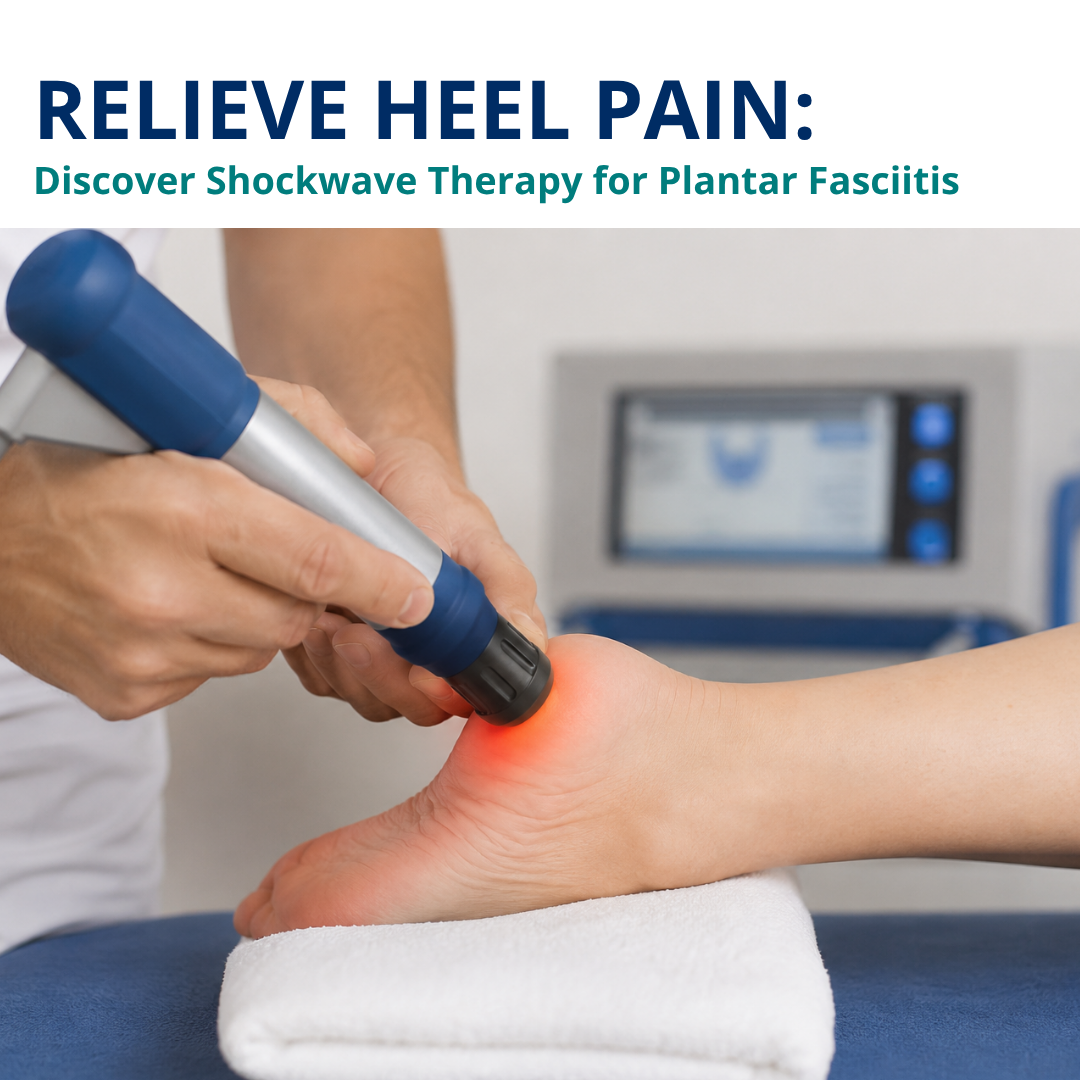
One of the most effective tools for chronic plantar fasciitis and tendinopathy is extracorporeal shockwave therapy.
Despite the intimidating name, shockwave therapy is completely non-surgical and requires little to no downtime.
The concept behind it is fascinating.
When tissue becomes chronically degenerative, the body often stops treating it like an active injury. Blood flow decreases. Cellular activity slows. Healing plateaus.
Shockwave therapy helps “wake the tissue back up.”
High-energy acoustic waves are delivered into the damaged area, creating controlled microtrauma that stimulates a renewed healing response.
This process increases:
Blood circulation
Growth factor release
Cellular metabolism
Collagen remodeling
Breakdown of chronic scar tissue
For patients who have failed months — or even years — of conservative care, shockwave therapy often provides the biological reset needed to finally move healing forward.
It’s particularly effective for:
Chronic plantar fasciitis
Achilles tendinopathy
Calcific tendinitis
Chronic heel pain
Persistent soft tissue degeneration
And unlike surgery, there are:
No incisions
No stitches
No immobilization period
Minimal recovery interruption
Laser Therapy: Healing at the Cellular Level
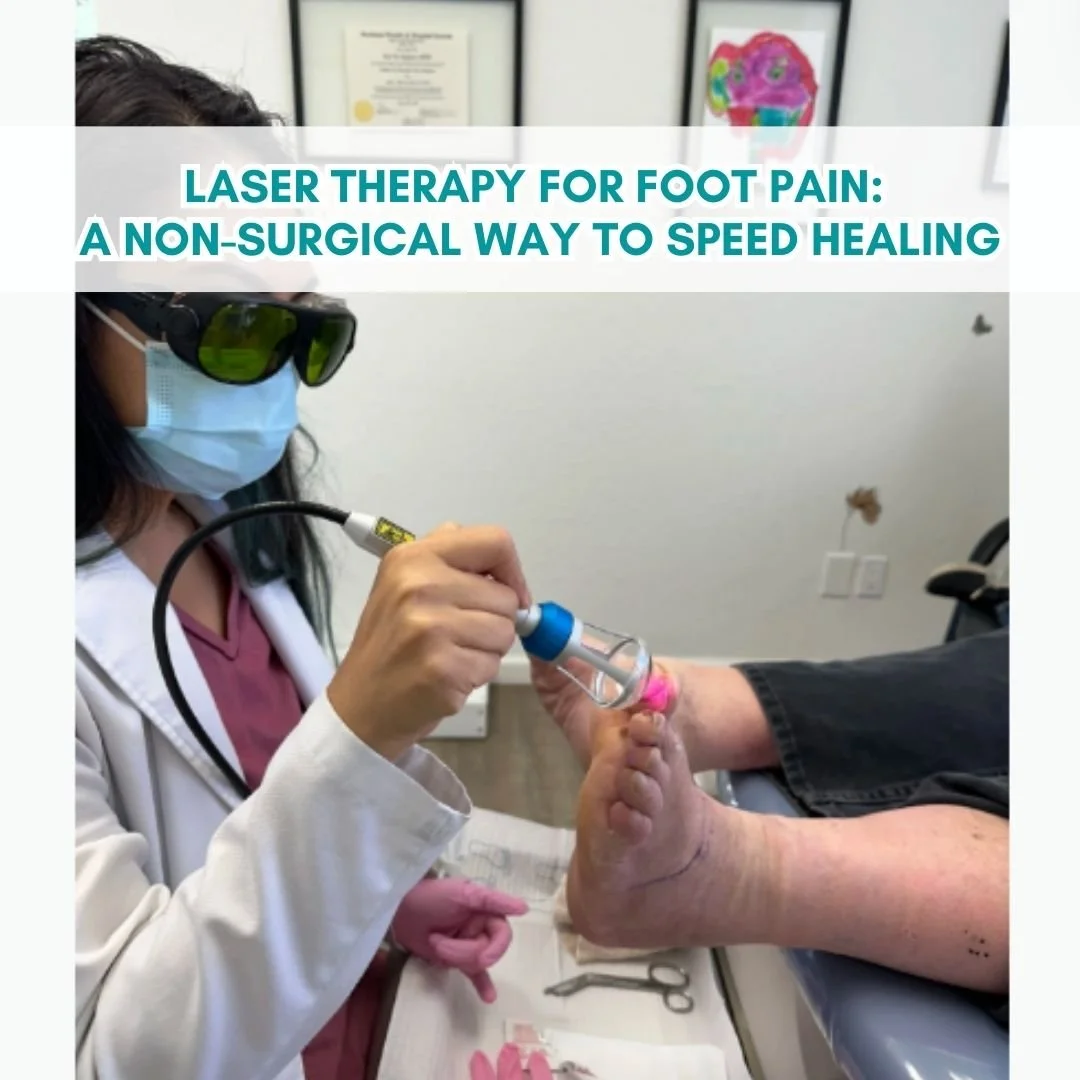
Class IV laser therapy works through a process known as photobiomodulation.
Specific wavelengths of light penetrate deep into tissue and stimulate mitochondrial activity within cells. In simpler terms, laser therapy helps cells produce more usable energy for repair and recovery.
This leads to:
Faster healing
Improved circulation
Reduced inflammation
Reduced pain signaling
Enhanced tissue repair
Laser therapy is especially useful in areas with naturally poor blood supply — exactly the tissues most prone to chronic injury in the foot and ankle.
Patients often appreciate that laser therapy is:
Completely non-invasive
Painless
Quick
Comfortable
Cumulative in effect over time
While laser therapy can help independently, it becomes even more powerful when combined with regenerative injections and shockwave therapy as part of a comprehensive protocol.
Why Comprehensive Treatment Matters
No single therapy fixes every patient.
And that’s precisely the point.
Chronic foot pain is rarely caused by one isolated factor. It usually involves multiple overlapping dysfunctions happening simultaneously:
Degenerated tissue
Mechanical overload
Poor healing capacity
Chronic inflammation
Compensation patterns
Weakness and instability
Addressing only one layer often leads to incomplete results.
That’s why comprehensive treatment protocols matter.
At Pacific Point Podiatry, we combine therapies strategically so they work together instead of independently.
1: Tissue Repair
Regenerative injections and laser therapy help improve tissue quality and stimulate repair.
2: Healing Activation
Shockwave therapy helps restart stalled healing processes.
3: Mechanical Correction
Orthotics, gait retraining, footwear modification, and mobility work reduce repetitive overload.
4: Systemic Optimization
Improving recovery, inflammation, sleep, nutrition, and metabolic health supports healing from the inside out.
This integrated approach creates a far greater opportunity for lasting recovery than symptom suppression alone.
Who Is a Good Candidate for This Approach?
You may be an excellent candidate for regenerative, root-cause foot pain treatment if:
Your pain has lasted longer than three months
You’ve already tried rest, stretching, or physical therapy
Cortisone injections only helped temporarily
You’re frustrated by recurring flare-ups
Walking or standing is becoming increasingly difficult
You’re changing how you move because of pain
You want to avoid surgery if possible
You’ve been told to “just live with it”
You want answers instead of temporary fixes
Many of our patients come to us after years of frustration.
Not because they failed treatment.
Because the treatment never fully addressed the real problem.
What to Expect at Pacific Point Podiatry
Your first visit is designed to provide clarity.
Not a rushed five-minute appointment.
Not a generic protocol.
Not guesswork.
We take the time to evaluate:
The condition of the tissue itself
Your biomechanics and gait mechanics
Your prior treatment history
Daily activity demands
Lifestyle contributors to healing or inflammation
Long-term goals and expectations
From there, we create a customized plan designed specifically around your condition and recovery goals. Some patients need regenerative injections. Some benefit most from shockwave therapy. Others require biomechanical correction, movement retraining, or layered therapies working together. There is no one-size-fits-all solution because no two patients are exactly alike. But what every patient deserves is an honest explanation of why they hurt and a thoughtful plan designed around real healing. Because the goal was never just less pain.
The goal is restoring function, movement, confidence, and quality of life.
And for many patients, that becomes possible only when treatment finally moves beyond symptom suppression — and starts addressing the true root cause.
Ready to Stop Managing Pain and Start Resolving It?
Book a Functional Recovery Evaluation at Pacific Point Podiatry. Walk in with questions. Leave with answers — and a real plan.