Chronic Foot Pain Treatment: What Most Doctors Don’t Tell You
Why Your Foot Pain Isn’t Getting Better—and What You Need to Do Now
If you’re dealing with chronic foot pain, you’re probably tired of guessing what will finally make it go away.
You’ve likely already tried everything you were told to do:
Rest. Ice. Stretching. Better shoes. Orthotics. Physical therapy. Maybe even cortisone injections.
And yet—the pain is still there.
Or worse, it keeps coming back.
Here’s the truth most patients are never clearly told:
If your foot pain keeps returning, you are not dealing with a simple injury anymore—you are dealing with an unresolved healing failure.
And no amount of temporary symptom relief will fix that. At this point, continuing the same approach is not just ineffective—it’s what keeps you stuck.
This article will break down exactly why chronic foot pain doesn’t heal, what most treatments miss, and what actually works when nothing else has.
Why Chronic Foot Pain Keeps Coming Back
Most chronic foot pain conditions—like plantar fasciitis, heel pain, and Achilles tendinopathy—don’t behave like normal injuries.
They don’t follow a clean healing timeline.
Instead, they follow a cycle:
Pain improves temporarily
You return to normal activity
Symptoms return
You reduce activity again
Pain improves again
This cycle repeats for months or even years.
And the reason is simple:
The underlying problem was never fully repaired in the first place.
Most treatments focus on calming symptoms—not restoring function. So when you load the foot again, the injury is still there.
The Most Important Truth About Foot Pain
Here’s what most doctors don’t say clearly enough:
Pain relief is not healing.
You can feel better and still not be healed.
That distinction is the reason so many people get stuck in chronic pain cycles.
Standard treatments usually include:
Anti-inflammatory medication
Rest and activity reduction
Orthotics or arch supports
Stretching programs
Cortisone injections
These can help you feel better temporarily.
But they do not necessarily:
Repair damaged tissue
Restore tendon or fascia strength
Correct faulty biomechanics
Improve your body’s healing capacity
So the pain returns.
Not because the treatment “failed”—but because it was never designed to fully fix the root problem.
The 3 Real Causes of Chronic Foot Pain
If your pain has lasted more than a few months, it is almost never caused by just one issue.
In most cases, there are three overlapping drivers:
1. Tissue Breakdown (Degeneration, Not Just Inflammation)
Most people are told they have “inflammation.”
But in chronic cases, the real issue is often degenerative tissue damage.
This includes:
Micro-tears in the plantar fascia
Collagen breakdown in tendons
Reduced elasticity and strength
Poor blood supply to the injured area
Over time, the tissue becomes structurally weaker. And once that happens, rest alone cannot restore it. Because rest does not rebuild tissue. It only pauses stress.
2. Mechanical Overload (You Are Re-Injuring It Daily)
Every step you take loads your foot.
That means even small mechanical issues can keep the injury active.
Common contributors include:
Flat feet or high arches
Poor ankle mobility
Weak stabilizing muscles
Compensation from old injuries
Improper footwear
Gait dysfunction
Even if inflammation improves temporarily…
If mechanics are not corrected, the injury keeps getting re-triggered.
This is one of the biggest reasons people fail conservative care.
3. Systemic Inflammation (Your Body Environment Matters)
Healing doesn’t just happen in the foot. It depends on your entire body. If your system is inflamed or under stress, healing slows dramatically.
Common contributors include:
Chronic stress
Poor sleep quality
Blood sugar instability
Nutritional deficiencies
High inflammatory diet patterns
Hormonal imbalance
This is why two people with the same diagnosis can heal at completely different speeds.
One recovers quickly. The other struggles for years.
The difference is not just the injury. It is the healing environment.
Why Cortisone Injections Don’t Fix Chronic Foot Pain
Cortisone injections are often used for plantar fasciitis, heel pain, and tendon injuries.
And they do reduce pain.
But here’s what most patients are not told clearly:
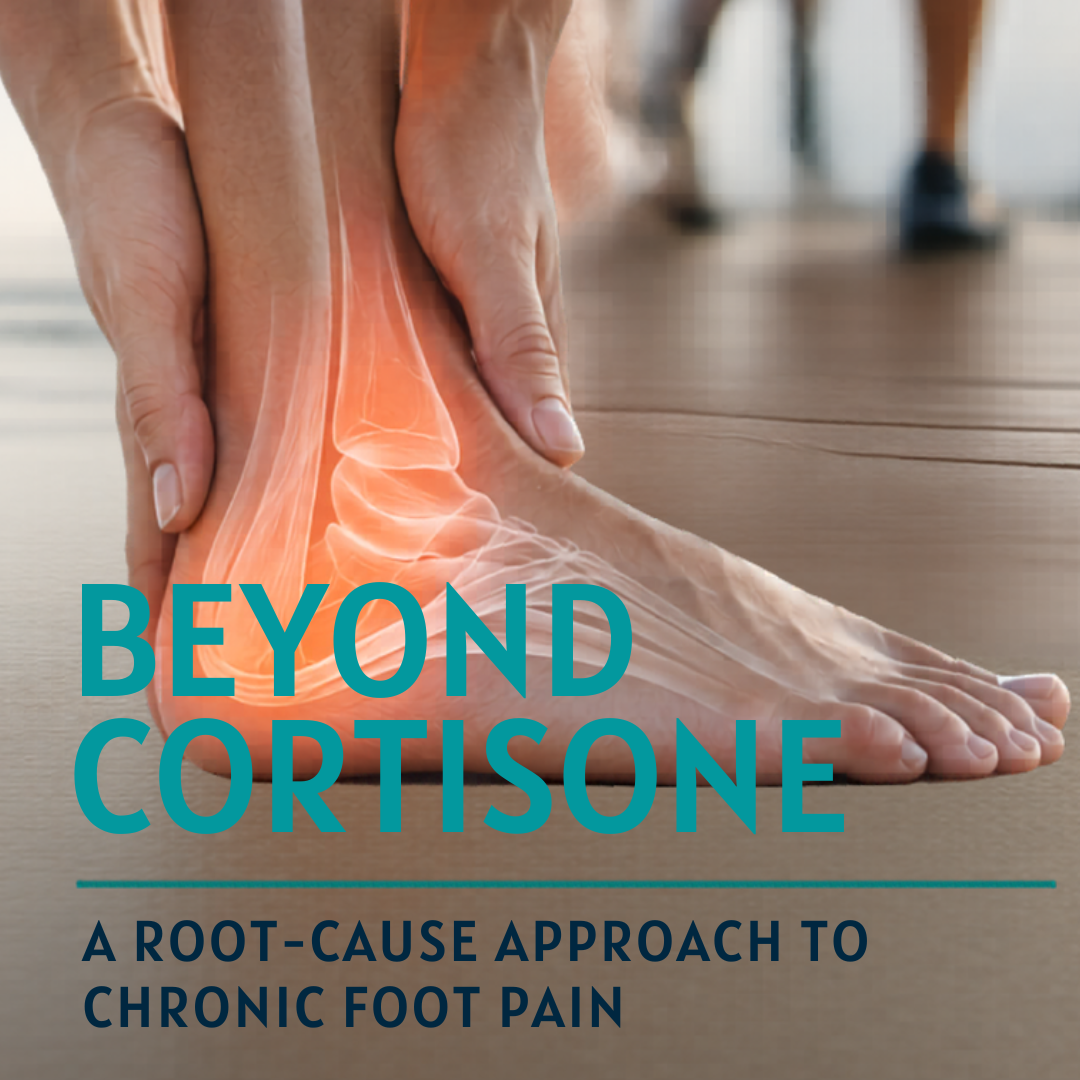
Cortisone does not heal tissue—it only suppresses inflammation.
That means:
Pain decreases temporarily
Activity increases too soon
Tissue remains damaged
Pain returns after the medication wears off
Even worse, repeated injections may weaken already compromised tissue.
So if you’ve had multiple injections and your pain returned…
That is not unusual. That is expected. Because nothing structural has been repaired.
What Actually Works for Chronic Foot Pain
If your pain has become chronic, the treatment approach must change completely.
You are no longer trying to reduce inflammation.
You are trying to:
Rebuild tissue + restore mechanics + improve healing capacity
This requires regenerative and functional treatment—not symptom suppression.
Regenerative Foot Pain Treatment: A Different Standard of Care
At advanced practices like Pacific Point Podiatry, treatment is designed to actually restore function.
Here’s what that looks like:
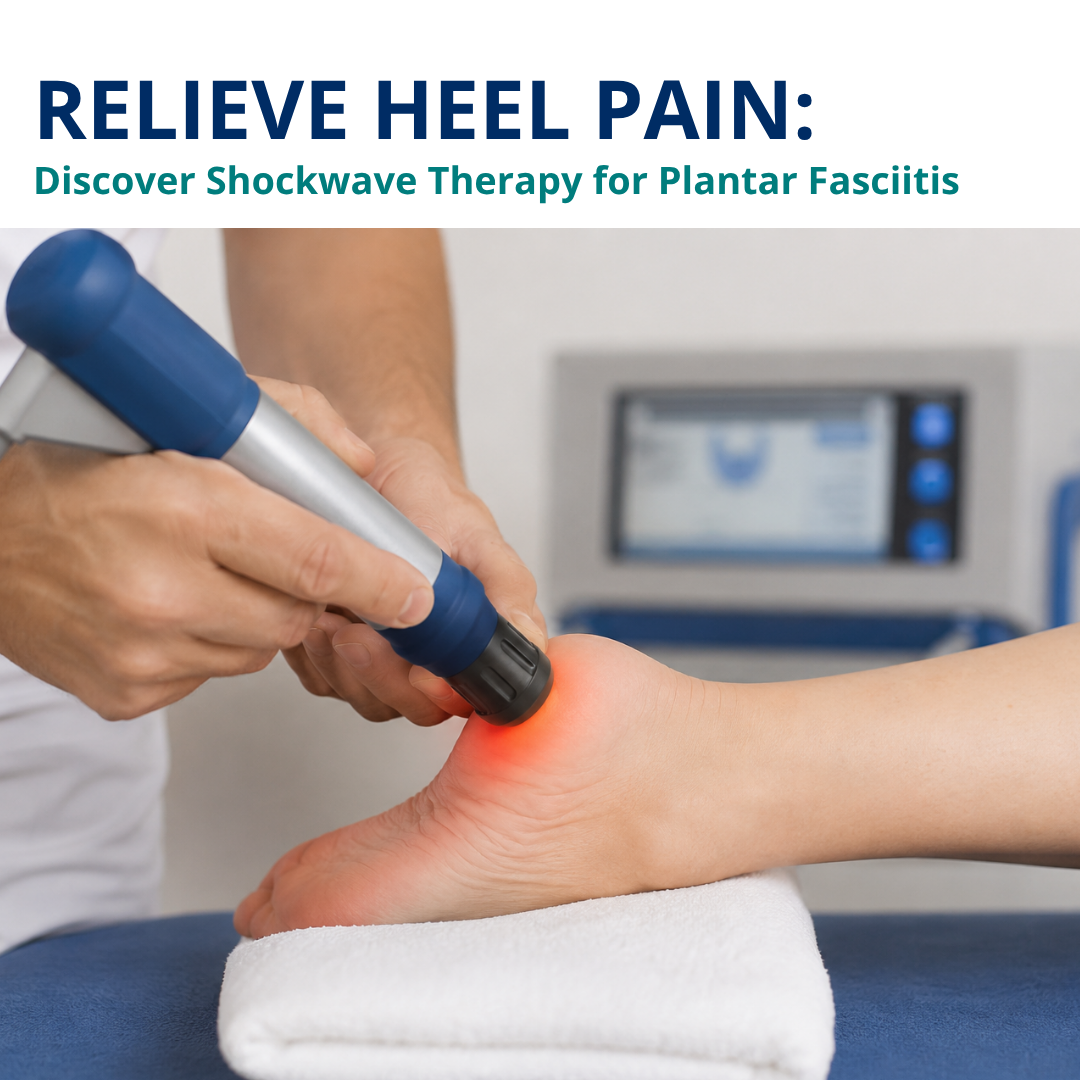
Shockwave Therapy (For Chronic Plantar Fasciitis & Heel Pain)
Shockwave therapy uses acoustic energy to stimulate healing in damaged tissue.
It helps:
Restart stalled healing processes
Increase blood flow to damaged areas
Break up chronic scar tissue
Stimulate cellular repair
This is especially effective when pain has lasted longer than 3–6 months.
Because at that stage, tissue often needs a “reset.”
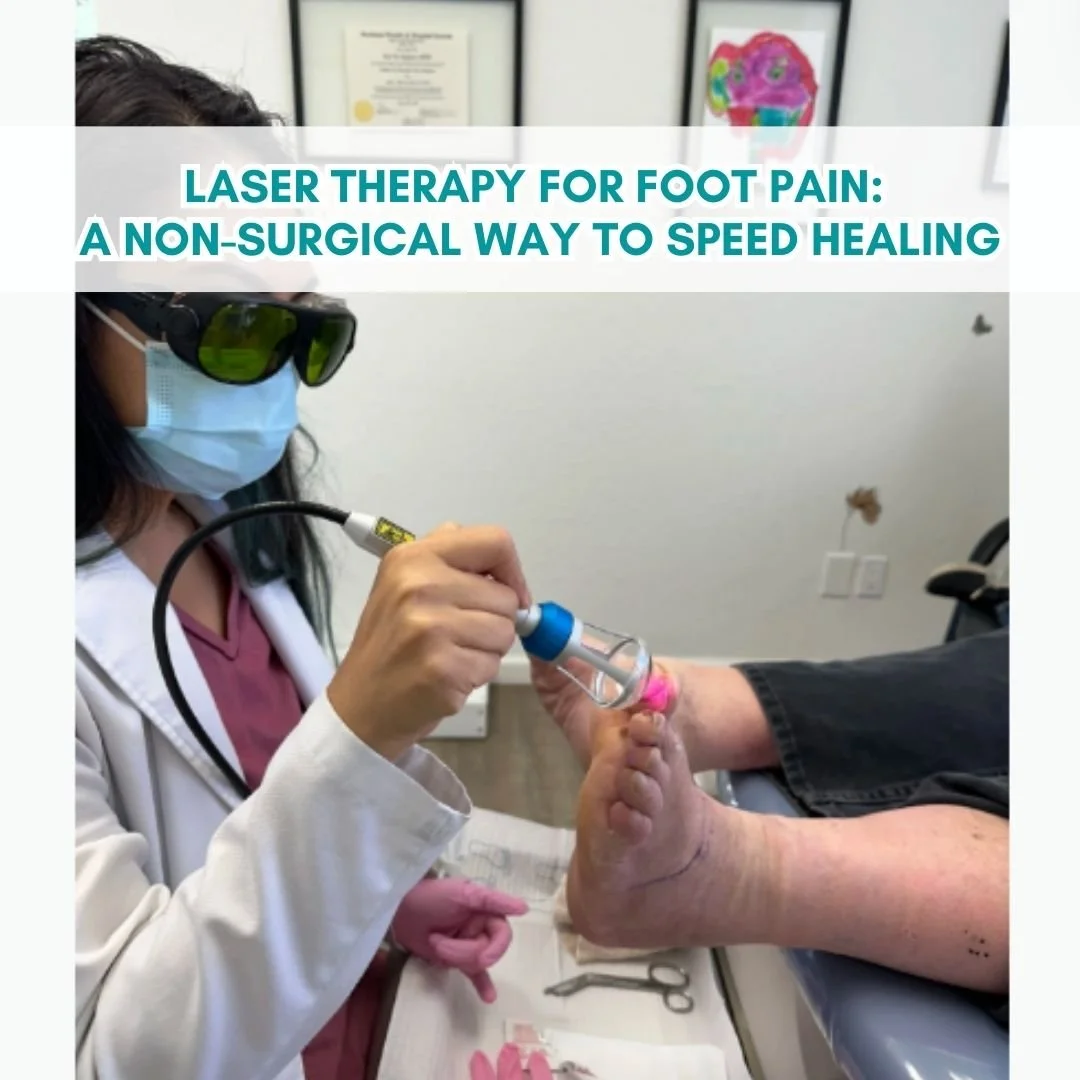
Laser Therapy (Cellular Healing Support)
Laser therapy uses targeted light energy to stimulate tissue repair.
It can:
Reduce chronic inflammation
Improve circulation
Enhance cellular regeneration
Decrease pain signaling
It supports healing without downtime or invasive procedures.
Regenerative Injection Therapy (Repair-Based, Not Pain-Based)
Unlike cortisone, regenerative injections are designed to support tissue rebuilding.
The goal is not to shut pain off.
The goal is to:
Help your body repair what it failed to heal on its own.
This approach is used based on injury type and severity.
Biomechanical Correction (The Step Most Clinics Miss)
If movement is not corrected, pain often returns—even after good treatment.
This includes:
Gait analysis
Custom orthotics when appropriate
Footwear correction
Muscle strengthening
Movement retraining
This step is critical.
Because without it, everything else is temporary.
Functional Medicine Support (Improving Healing Capacity)
Because healing is systemic, some patients need support addressing:
Inflammation levels
Nutrition quality
Stress and recovery
Blood sugar balance
Sleep quality
When the internal environment improves, the body becomes more capable of healing external injuries.
Why Some Patients Heal—and Others Don’t
Two people can have identical diagnoses but completely different outcomes.
The difference usually comes down to:
Whether tissue repair is actually stimulated
Whether biomechanics are corrected
Whether systemic inflammation is addressed
Whether care is structured or fragmented
Whether treatment is reactive or root-cause based
In short:
Successful recovery requires changing the system causing the pain—not just treating the symptom.
When You Should Stop Waiting
If your foot pain has lasted more than 3 months, you are no longer in the early healing phase.
At this stage, waiting often leads to:
Worsening tissue degeneration
Compensation in walking patterns
Knee, hip, or back pain
Reduced activity and fitness
Chronic pain adaptation
This does not mean your condition is permanent. It means your approach needs to change immediately.
Who This Approach Is For
This is for you if:
You’ve had foot pain for 3+ months
Rest, orthotics, or PT haven’t provided lasting relief
Pain returns after injections or temporary fixes
You’re starting to change how you walk
You want to avoid surgery if possible
If this is you, you are not “out of options.” You are just out of the standard approach.
What Happens at a Functional Recovery Evaluation
A proper evaluation should eliminate guesswork.
It should clearly identify:
What tissue is actually damaged
How your mechanics contribute to pain
Whether systemic factors are slowing healing
What stage your condition is in
What realistic recovery looks like
At Pacific Point Podiatry, your evaluation includes:
Full biomechanical assessment
Tissue and injury evaluation
Imaging if needed
Clear diagnosis in plain language
Personalized treatment plan
Honest timeline and expectations
No templates. No guesswork. No generic protocols.
Final Truth About Chronic Foot Pain
If your foot pain keeps coming back, it is not random.
It is not bad luck. And it is not something you just have to live with. It is a predictable pattern that has not been corrected.
And predictable problems have solutions.
But only if you stop treating symptoms—and start addressing causes.
Take the Next Step
If you’re tired of temporary fixes and want a real solution, the next step is simple:
Book a Functional Recovery Evaluation.
You will finally understand:
What is actually causing your pain
Why it hasn’t healed
And what it will take to fix it
Because at this point, the goal is no longer just pain relief.
It is a full recovery.