When “Minor Toe Pain” Is Actually a Structural Problem
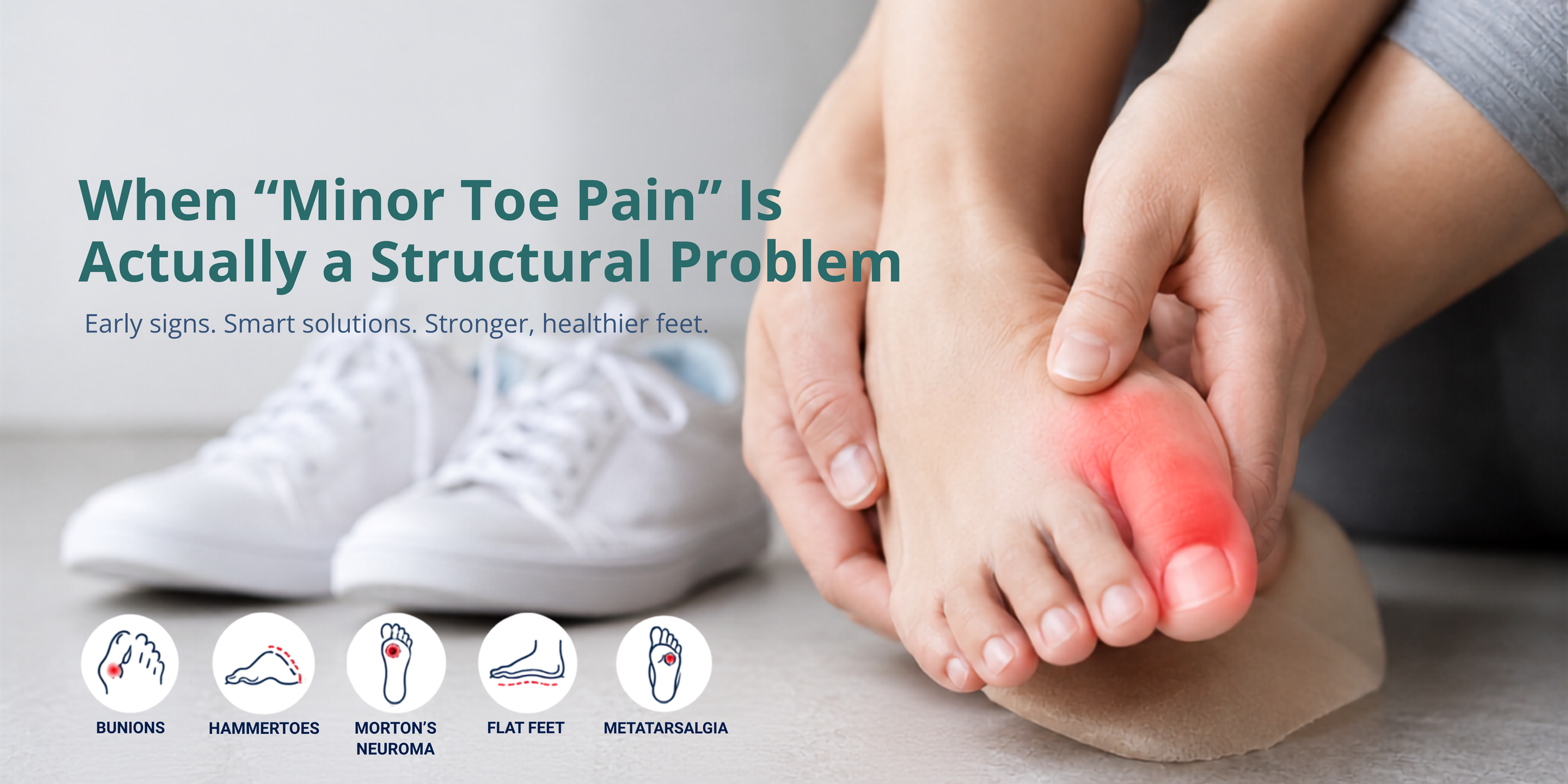
Don't Ignore Persistent Toe Pain
Most people don't think much about toe pain. Maybe it's a slight ache after a long day on your feet, discomfort while wearing certain shoes, or tenderness that seems to come and go. Because the pain is mild, it's easy to assume it's nothing more than temporary soreness.
Sometimes that's true.
However, persistent or recurring toe pain can be your body's way of signaling a structural problem within the foot. Conditions such as bunions, hammertoes, arthritis, or collapsing arches often begin with subtle symptoms that worsen gradually over time. While they may start as minor inconveniences, these conditions rarely improve on their own.
The good news is that many structural foot problems respond well to early treatment. Recognizing the warning signs and seeking professional evaluation before the condition progresses can help relieve pain, preserve mobility, and reduce the need for more extensive treatment later.
In this guide, we'll explore the difference between temporary toe pain and structural foot problems, common causes, available treatments, and when it's time to see a podiatrist.
Understanding Minor Toe Pain: Common Causes
Not every sore toe indicates a serious medical condition. Many cases are caused by temporary irritation or everyday activities.
Some of the most common causes include:
Ill-Fitting Footwear
Shoes that are too tight, narrow, or lack adequate support place excessive pressure on the toes. High heels, pointed shoes, and worn-out sneakers are frequent contributors to toe discomfort.
Overuse
Long walks, running, hiking, or spending hours standing at work can temporarily irritate the joints, tendons, and muscles of the toes.
Minor Injuries
Stubbing a toe, dropping a heavy object on your foot, or repetitive impact during sports can cause bruising and inflammation.
Ingrown Toenails
Improper nail trimming or tight shoes may cause the nail edge to grow into the surrounding skin, resulting in redness, swelling, and pain.
Corns and Calluses
Repeated friction creates thickened areas of skin that become painful when pressure is applied.
These conditions often improve with rest, ice, better footwear, or simple home care.
The concern arises when the pain repeatedly returns or never completely resolves.
The Anatomy of the Foot: Why Structure Matters
Your feet are among the most complex structures in the human body.
Each foot contains:
26 bones
33 joints
More than 100 muscles, tendons, and ligaments
Every step you take depends on these structures working together in perfect balance.
The toes aren't isolated body parts—they're connected to the metatarsals, arches, ankles, and lower legs through an intricate network of joints and soft tissues. When one part of this system becomes misaligned or unstable, the resulting stress often travels to another area.
For example:
Flat feet can place extra pressure on the forefoot.
Tight calf muscles may alter walking mechanics.
Weak arches can overload the big toe joint.
Joint instability may gradually change toe alignment.
Because of these connections, the source of toe pain isn't always located in the toe itself.
This is why podiatrists evaluate the entire foot rather than focusing solely on the area where discomfort occurs.
Identifying Structural Problems: Signs to Look For
Structural foot problems usually develop gradually.
Rather than sudden severe pain, many people notice subtle symptoms that become more frequent over time.
Watch for these warning signs:
Pain lasting longer than two weeks
Recurring pain that comes back after activity
Visible changes in toe alignment
A bump developing near the big toe joint
Swelling that doesn't completely disappear overnight
Difficulty fitting comfortably into shoes
Stiffness in the toe joints
Pain when walking or standing
Numbness or tingling between the toes
Changes in the way you walk
If you experience several of these symptoms together, it's worth scheduling a professional evaluation.
Early diagnosis often prevents minor structural issues from progressing into more complex problems.
Common Structural Issues Leading to Toe Pain
Several structural conditions commonly begin with what feels like minor toe pain.
Bunions (Hallux Valgus)
A bunion develops when the big toe gradually shifts toward the second toe, causing the joint at its base to protrude outward.
Symptoms often include:
Pain along the side of the foot
Redness
Swelling
Difficulty wearing shoes
Progressive enlargement of the bump
Because bunions worsen over time, early treatment can help slow progression and relieve discomfort.
Hammertoes
A hammertoe occurs when one or more smaller toes become permanently bent due to muscle imbalance.
Early symptoms include:
Toe stiffness
Corns on top of the toe
Pain while wearing shoes
Difficulty straightening the toe
Flexible hammertoes are generally easier to treat than rigid deformities.
Morton's Neuroma
This condition involves thickening of tissue surrounding a nerve between the toes.
Many patients describe:
Burning pain
Tingling
Numbness
Feeling like there's a pebble inside the shoe
Tight footwear often aggravates symptoms.
Flat Feet
When the arches collapse, body weight shifts unevenly across the foot.
This can cause:
Forefoot pain
Big toe pain
Heel pain
Fatigue after walking
Knee discomfort
Many people don't realize their toe pain actually begins with poor arch support.
Metatarsalgia
Metatarsalgia refers to inflammation beneath the ball of the foot.
Because the metatarsal bones connect directly to the toes, pressure in this area often produces pain that radiates forward into the toes.
Arthritis
Wear-and-tear arthritis commonly affects the big toe joint.
Symptoms include:
Joint stiffness
Swelling
Bone spurs
Reduced flexibility
Pain while pushing off during walking
Without treatment, arthritis may significantly limit mobility.
The Importance of Early Diagnosis
One of the biggest mistakes people make is assuming foot pain will simply disappear with time.
Structural problems rarely resolve on their own.
Instead, they typically become progressively worse.
Early diagnosis offers several advantages:
More conservative treatment options
Better long-term outcomes
Reduced risk of permanent deformity
Lower treatment costs
Prevention of knee, hip, and lower back pain caused by altered walking patterns
Even conditions that eventually require surgery generally have better outcomes when addressed before severe deformity develops.
Treatment Options for Structural Foot Problems
Treatment depends on the specific diagnosis and severity of the condition.
Conservative options often include:
Custom Orthotics
Prescription orthotics improve foot alignment and redistribute pressure away from painful joints.
Footwear Modifications
Supportive shoes with wider toe boxes reduce pressure on sensitive areas while improving stability.
Physical Therapy
Targeted exercises strengthen the muscles supporting the foot while improving flexibility and gait mechanics.
Padding and Splinting
Padding, taping, or splints may reduce discomfort while slowing progression of certain deformities.
Anti-Inflammatory Care
Depending on the diagnosis, treatment may include:
Ice therapy
Anti-inflammatory medications
Corticosteroid injections
Activity modification
Minimally Invasive Foot Surgery
When conservative treatments no longer provide relief, minimally invasive surgery may correct the underlying structural problem through smaller incisions with less disruption to surrounding tissues.
For many patients, this approach offers faster recovery and improved function compared to traditional open procedures.
Preventative Measures for Toe Pain
Although not every structural problem can be prevented, healthy habits reduce your risk.
Protect your feet by:
Wearing properly fitted shoes
Avoiding prolonged use of high heels
Replacing worn athletic shoes
Maintaining a healthy weight
Stretching daily
Strengthening your feet and ankles
Addressing recurring pain early
Scheduling regular foot evaluations if structural problems run in your family
Small daily choices make a significant difference over time.
When to See a Specialist: Podiatrists and Orthopedists
You should schedule an evaluation if:
Pain lasts longer than two weeks
Walking becomes uncomfortable
You notice swelling or deformity
Your shoes no longer fit properly
Pain repeatedly returns
Home treatment isn't helping
A podiatrist specializes in diagnosing and treating foot and ankle conditions and is often the best first step for persistent toe pain. If advanced reconstructive surgery or broader musculoskeletal care is needed, an orthopedic foot and ankle specialist may also be involved.
Seeking care early can often prevent more extensive treatment later.
Lifestyle Changes to Support Foot Health
Long-term foot health depends on daily habits.
Simple lifestyle changes include:
Rotating shoes instead of wearing the same pair every day
Stretching before exercise
Using supportive insoles when standing for long periods
Maintaining flexibility through regular mobility exercises
Choosing low-impact activities like swimming or cycling
Listening to persistent pain rather than pushing through it
Healthy feet support an active lifestyle—and taking care of them today can help you stay mobile for years to come.
Conclusion: Taking Toe Pain Seriously
Minor toe pain may seem like a small inconvenience, but it can be the first sign of a structural foot problem that will continue to progress if left untreated. Conditions like bunions, hammertoes, arthritis, and flat feet often develop gradually, making early symptoms easy to overlook.
The earlier these issues are diagnosed, the more treatment options are available. Conservative therapies, custom orthotics, physical therapy, and minimally invasive procedures can often relieve pain, improve function, and help you avoid more complex interventions in the future.
If your toe pain has lasted more than a couple of weeks, keeps coming back, or is affecting the way you walk, don't ignore it. A comprehensive evaluation by a podiatrist can identify the underlying cause and create a personalized treatment plan that gets you back on your feet comfortably.