Why Toenail Fungus Won’t Go Away — and What Works
Most people wait years before seeking treatment. By then, the infection is deeper, the nail is thicker, and clearing it takes longer. Understanding biology changes everything.
By the time most patients walk into our clinic about their toenails, they've already spent months — sometimes years — trying over-the-counter creams, hiding their feet in closed-toe shoes, and quietly hoping the problem would resolve on its own.
It rarely does.
Toenail fungus, or onychomycosis, is one of the most undertreated conditions in podiatry — not because it's rare, but because people feel embarrassed about it. They wait. And the longer they wait, the harder it becomes to treat.
This article explains what's actually happening beneath your nail, why standard treatments so often fail, and what a modern, evidence-informed approach looks like.
1 in 10
adults affected by toenail fungus
12–18 months
for a big toenail to fully grow out
< 1%
of cases resolve without treatment
What you're actually dealing with
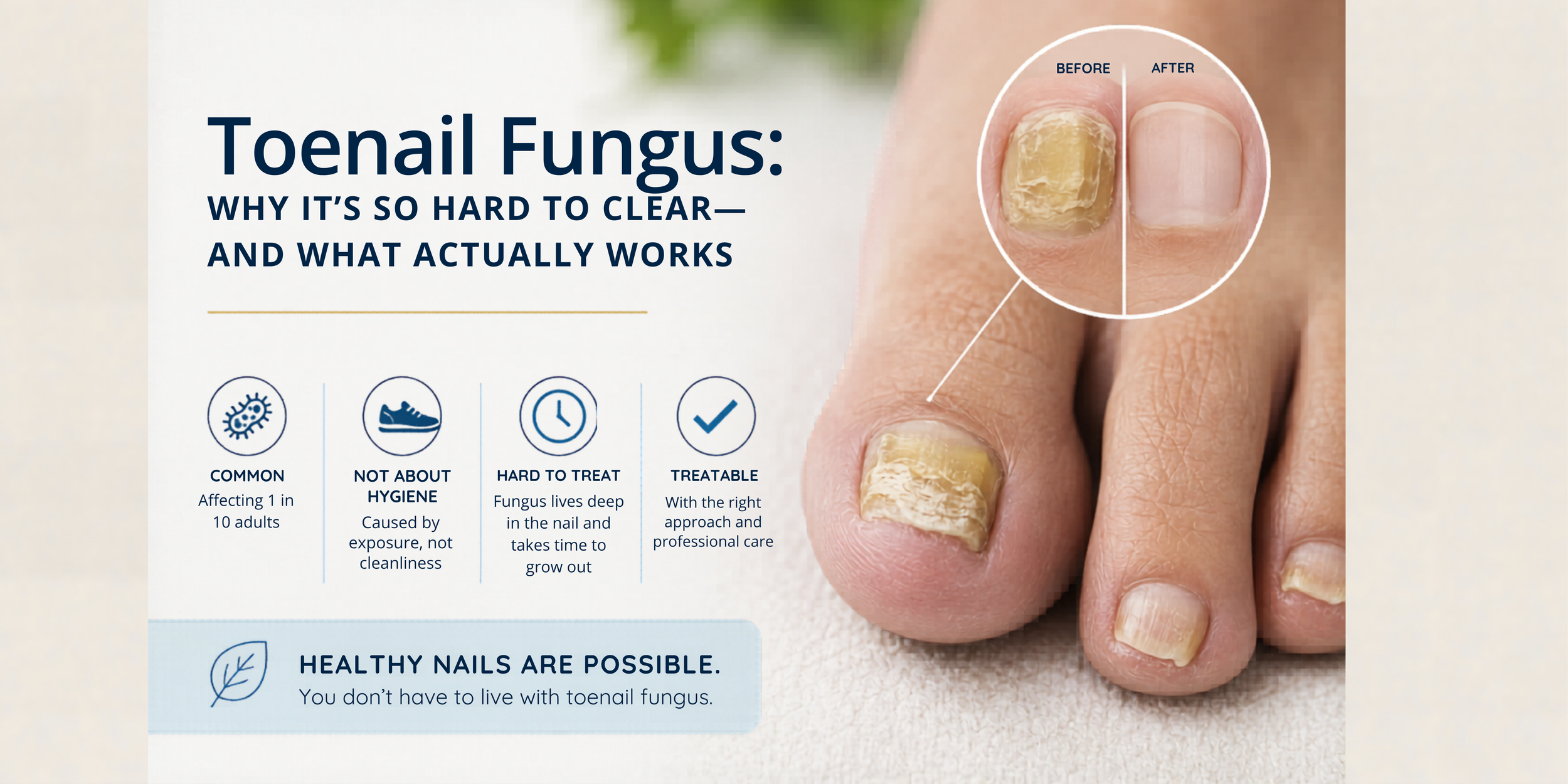
Onychomycosis is a fungal infection that takes hold beneath the nail plate and inside the nail structure itself. The most common culprits are dermatophytes — a family of fungi that thrive in warm, moist environments. Yeast and certain molds can also be responsible.
The infection begins quietly. Early signs are easy to dismiss:
White or yellow spot under the nail
Mild discoloration or dullness
Slight thickening at the tip
Increased brittleness
Crumbling at the edges
Nail separating from the bed
Left untreated, these early signs progress into nails that are thick, distorted, difficult to trim, and — in advanced cases — painful or capable of causing skin breakdown, particularly in diabetic or elderly patients.
“It doesn’t hurt, so I didn’t think it was a big deal.” This is the most common thing we hear. By the time a fungal nail is painful, the infection is typically severe. Earlier is always better.”
Why it's so common — and why hygiene has nothing to do with it
Fungus is everywhere. Public showers, locker rooms, pool decks, nail salons, shared footwear — all are common exposure points. Shoes themselves create the warm, dark, moist environment that dermatophytes love. Even the most scrupulous person can develop a fungal nail infection. Athletes and active people often face higher risk simply because they spend more time in communal spaces and athletic footwear.
Certain factors make infections more likely to develop and harder to clear:
Age. Nails grow more slowly, circulation decreases, and immune response changes with age — all of which favor fungal growth.
Nail trauma. Even minor injuries create entry points. Runners, hikers, and anyone with repetitive toe pressure is at elevated risk.
Athlete's foot. Untreated fungal skin infections can migrate into the nails, explaining why recurrent nail infections are so common.
Diabetes and poor circulation. Reduced blood flow makes it harder for the body to fight infection and heal. For these patients, thick fungal nails aren't merely cosmetic — they can create pressure, discomfort, and skin breakdown.
Immune system stress. Chronic illness, poor sleep, stress, and certain medications can all affect the body's ability to keep fungal organisms in check.
The real reason treatments fail
Here is something most patients don't understand before they come to see us: toenail fungus lives beneath the nail and inside its structure. The nail becomes a barrier.
Most over-the-counter antifungal products sit on top of the nail's surface. They never reach the infection.
Even prescription topical treatments struggle when nails are thick, heavily damaged, or long-infected. And because a healthy big toenail takes 12 to 18 months to fully grow out, even effective treatment looks like it isn't working for a long time — which leads most patients to give up too early.
The third major failure point is reinfection. If shoes, socks, shared spaces, and concurrent athlete's foot aren't addressed, the fungus returns — sometimes within weeks of apparent clearance.
Effective treatment isn't just about killing the fungus present today. It's about addressing the nail barrier, the timeline, and the environment.
“Successful treatment usually requires more than applying a cream. It requires understanding what’s actually in the way.”
What works — and for whom
There is no universal solution. The right treatment depends on severity, duration, the number of nails affected, your overall health, and what's been tried before. At Pacific Point Podiatry, we individualize treatment plans rather than reaching for the same prescription every time.
Professional nail debridement
Carefully thinning and reducing the nail removes physical barriers to treatment penetration, reduces pressure and discomfort, and decreases the overall fungal load. Often the most underrated step — and frequently the most immediately relieving.
Prescription topical therapy
Pharmaceutical-grade antifungal solutions can be effective in mild to moderate cases, especially when paired with debridement. The key is consistency — these require months of application as the healthy nail grows in behind the treated area.
Oral antifungal medication
Oral agents work systemically through the bloodstream and can be effective for extensive infections. They are not appropriate for everyone and may require liver monitoring. Some patients prefer to avoid them due to side effects or drug interactions.
Laser and light therapy (Advanced)
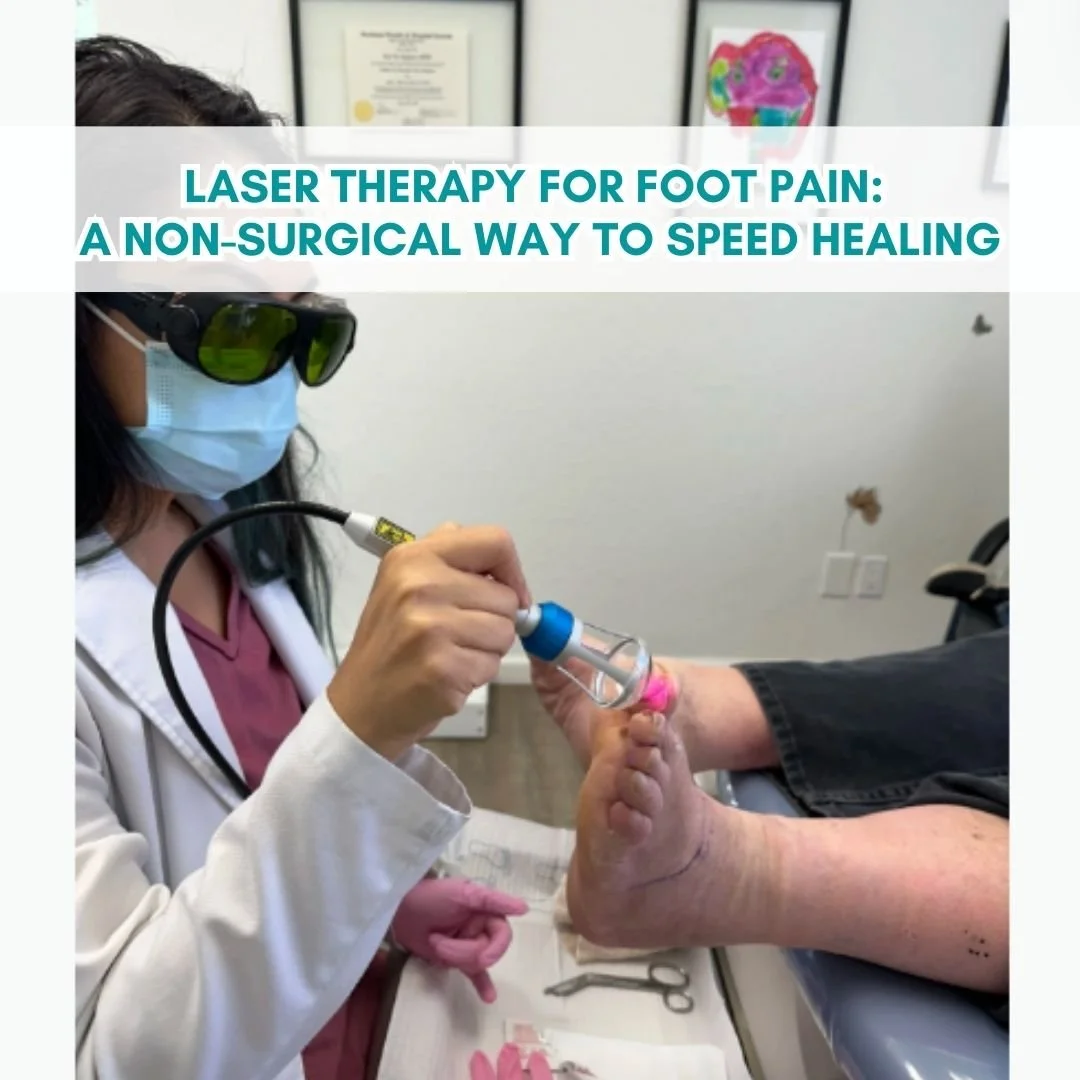
Laser therapy targets fungal organisms beneath the nail without damaging surrounding tissue — addressing the barrier problem directly. Our Toenail Fungus Center uses Remy Class IV Laser and ToeFX Light Therapy, often in combination. Non-invasive, no downtime, no systemic medication side effects. Particularly useful for patients who want to avoid oral antifungals or whose infections have been resistant to topical treatment.
For stubborn or advanced cases, combination therapy — debridement plus laser plus topicals, with attention to footwear hygiene and concurrent athlete's foot — consistently produces better outcomes than any single intervention alone.
Prevention is part of treatment
One of the most common reasons fungal infections recur: the visible fungus clears, but the conditions that allowed it to establish never change. Prevention isn't an afterthought — it's built into every treatment plan we create.
Rotate shoes and allow them to dry fully
Change socks frequently, especially after exercise
Wear breathable footwear when possible
Treat athlete's foot promptly and completely
Avoid barefoot walking in public wet areas
Disinfect nail tools between uses
Replace heavily contaminated footwear
Support circulation, sleep, and immune health
The earlier you act, the simpler this is
Early-stage fungal nails are considerably easier to treat than longstanding infections. As time passes, nails thicken, fungus spreads deeper, additional nails become involved, and treatment timelines extend. Infections that might have resolved with topicals and debridement may ultimately require laser therapy or oral medication if left for years.
If your nails are thick, yellowed, brittle, crumbling, or separating from the nail bed — even if they don't hurt yet — it's worth having them evaluated. There are more effective, less invasive options available today than ever before.
You don't need to keep hiding your feet.
Ready to stop guessing?
Pacific Point Podiatry's Toenail Fungus Center offers individualized, non-invasive treatment options — including laser therapy — for mild to advanced fungal nail infections.